For a long time, I made home networking harder than it needed to be because I thought every important device deserved a manually configured static IP address. If a printer mattered, I hard-coded it. If a NAS mattered, I hard-coded it. If a server mattered, I definitely hard-coded it. The result was not a beautifully engineered network. It was a network full of little decisions I had to remember later.
What finally made things click was understanding that three related ideas were being mixed together in my head: a static IP set directly on the device, a DHCP reservation managed by the router or DHCP server, and a lease that happens to stay stable for a while. They can all produce an address that looks "unchanging" from the outside, but they are not the same thing operationally. Once I understood the difference, the whole network felt less like trivia and more like policy.
- Why static-looking addresses can come from very different mechanisms
- What DHCP actually does and where leases fit in
- What a manual static IP really means
- Why DHCP reservations are often the cleaner home-network answer
- When a lease is enough and when it is not
- Which devices should usually be dynamic, reserved, or manually static
- What can go wrong when these choices are mixed carelessly
- How I think about address management now
The first confusing part is that "stable" does not always mean "static"
One of the reasons this subject feels slippery is that a device can keep the same address for days, weeks, or months without actually being statically configured. A laptop may always seem to come back as 192.168.50.23. A printer might appear to live forever at 192.168.50.40. That visual stability encourages a natural but slightly wrong conclusion: the address must be static.
Sometimes it is. Often it is not.
In practice, a device can look stable for at least three different reasons:
- the IP address is manually configured on the device itself;
- the DHCP server is configured to always hand that device the same address;
- the device keeps renewing its DHCP lease successfully, so it repeatedly receives the same address from the available pool.
To a casual observer, all three can feel identical. To the person who has to troubleshoot the network six months later, they are very different stories.
DHCP is not just "automatic IPs"; it is a policy system
The foundation here is RFC 2131, which defines DHCP as both a way to deliver configuration parameters and a mechanism for allocating addresses to hosts. That second part matters. DHCP is not merely a convenience feature that saves you from typing numbers. It is a system for deciding who gets what configuration, for how long, and under which administrative rules.
RFC 2131 describes three allocation mechanisms:
- automatic allocation, where DHCP assigns a permanent IP address to a client;
- dynamic allocation, where DHCP assigns an IP address for a limited period of time;
- manual allocation, where the administrator chooses the client’s address and DHCP simply delivers that assignment.
That was a helpful mental reset for me. I had been treating DHCP as the opposite of static thinking, when the protocol itself already includes both reusable dynamic behavior and administrator-controlled fixed behavior. The real question is not "DHCP or static?" The real question is which allocation behavior fits the device and the network.
A lease is the time window during which an address belongs to a client
The word "lease" sounds more mysterious than it is. In plain terms, a DHCP lease is the period during which a client is allowed to use an address assigned by the DHCP server.
RFC 2131 defines dynamic allocation specifically as assignment for a limited period of time. That limited period is the lease. During that time, the device treats the address as its working identity on the network. Before the lease expires, it usually tries to renew it. If the renewal works, the device may keep using the same address. If not, it may eventually need a new one.
This is why many everyday devices appear more stable than beginners expect. They are not randomly receiving new addresses every hour. They usually renew their leases quietly and continue using the same address because nothing in the network policy required a change.
A DHCP lease does not mean the address will constantly change. In a calm home network, a device may renew the same address repeatedly and look perfectly stable for long periods.
The lease model is useful because it allows address reuse. If a device disappears permanently, the network does not need to keep its address reserved forever by accident. DHCP can eventually reclaim it and hand it to another client.
A manual static IP means the device is no longer asking DHCP for its address
When people say "set a static IP," they often mean typing the address directly into the device’s network settings. In that model, the device is told exactly which IP address, subnet mask, gateway, and usually DNS server to use. It is no longer relying on the DHCP server to choose those values for it.
This can be appropriate, but it is a stronger choice than many beginners realize. The moment you hard-code the address on the device, you also take on the job of making sure that:
- the address is valid for that subnet;
- the subnet mask is correct;
- the gateway is correct;
- the DNS servers are correct;
- the chosen address does not collide with the DHCP pool or another manually assigned host.
That is where I used to create small future problems for myself. The device worked on the day I configured it, so I treated the matter as solved. Months later, I would change DNS, adjust the subnet, rebuild a router, or expand the DHCP scope, and the manually configured device would quietly remain on the old assumptions until something broke in a way that felt strangely personal.
Manual static addressing is not wrong. It is just easy to overuse.
A DHCP reservation usually gives you the best parts of both worlds
What most home routers call a DHCP reservation is, in practical terms, a rule that says: when this specific device asks for an address, always give it this one. The device still uses DHCP. It still learns other settings from the server. But the server treats that client consistently.
That is very close to the spirit of manual allocation in RFC 2131: the administrator decides the address, while DHCP remains the delivery mechanism.
This is the approach that made my network feel calmer. A reserved device still behaves like a DHCP client, so central changes remain easier. If I change DNS servers, update the gateway, shorten or lengthen lease policy, or rebuild part of the network, I am still managing that logic at the DHCP server instead of hunting through individual devices.
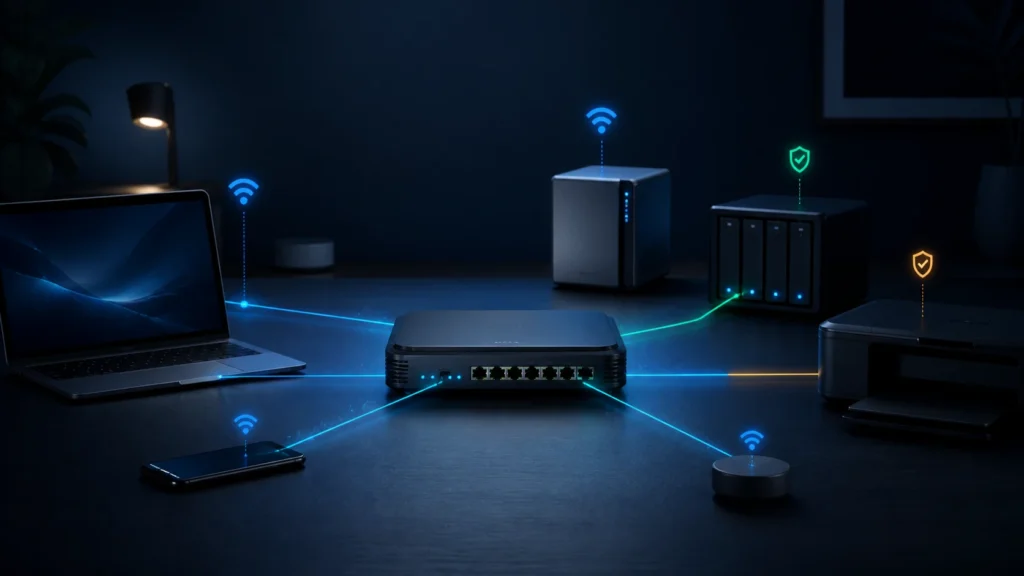
For many home and homelab environments, reservations are the clean answer for:
- printers;
- NAS appliances;
- hypervisors;
- access points;
- cameras that need stable references;
- home automation controllers;
- services that other devices reach by IP or DNS.
In other words, if the device should remain easy to find, but there is no special reason to hard-code its full network stack on the device itself, a reservation is often the most elegant choice.
A normal dynamic lease is often exactly what you want
Not every device deserves a fixed address, and trying to make every address memorable is usually a sign that the network is being overmanaged.
Dynamic leases are excellent for devices such as:
- phones;
- tablets;
- guest laptops;
- temporary test machines;
- personal laptops that do not host services;
- smart devices you do not need to reach directly.
These clients usually care more about convenient connectivity than fixed identity. They need valid network settings, internet access, and maybe DNS resolution, but they do not need the rest of the network to treat them like landmarks.
This was another mindset shift for me. I used to equate permanence with seriousness. If a device mattered to me, I felt tempted to freeze its address. But many devices matter without needing to be targets. A laptop can be important and still be perfectly fine as an ordinary DHCP client.
The most common beginner mistake is mixing methods without a plan
Problems usually start when the same address space is managed partly by memory, partly by habit, and partly by luck.
Here are a few common failure patterns:
- a device is manually set to an address that still sits inside the DHCP pool;
- a reservation is created for an address already hard-coded elsewhere;
- the DHCP scope is expanded later and swallows addresses once treated as "safe static space";
- a router is replaced, but manually configured devices still point to old DNS or gateway values;
- someone mistakes a long DHCP lease for a true reservation and builds a service dependency on it.
None of these failures are especially dramatic on paper, but they create the kind of annoying, low-confidence network that teaches people to distrust their own infrastructure. A printer vanishes. A NAS responds sometimes and not others. A smart-home controller becomes unreachable after a router reset. The network begins to feel moody when the real issue is just inconsistent policy.
If you choose direct static addressing, keep those addresses in a clearly separated range outside the active DHCP pool. Otherwise, the DHCP server can legitimately offer an address that you thought was already “yours.”
Which method usually fits which kind of device
I do not think this subject needs a rigid doctrine, but a practical default matrix helps.
| Device type | Best default | Why |
|---|---|---|
| Phone, tablet, guest laptop | Dynamic lease | No need for stable inbound identity; low administrative overhead |
| Printer, NAS, mini server, access point | DHCP reservation | Stable address with centralized control and easier future changes |
| Infrastructure that must boot predictably even if DHCP is unavailable | Manual static IP | Useful when DHCP dependency itself would be a problem |
| Temporary lab VM or container | Dynamic lease | Short-lived identity is often fine and easier to recycle |
| Core firewall or router interfaces | Manual static IP | These are usually defining the network rather than consuming ordinary client policy |
That last distinction matters. A client device inside the LAN and the router interface that defines the LAN are not playing the same role. One is consuming policy; the other is part of the policy boundary itself.
The real goal is not fixed addresses. It is readable network intent.
This is where the earlier article on public vs. private address ranges connects naturally. IP management gets easier when the addresses communicate structure instead of old habits.
If a server subnet exists, I want the stable services there to be easy to reason about. If a management subnet exists, I want routers, switches, and hypervisors to be obvious residents of it. If a device is just another client on the general LAN, I do not want to elevate it into infrastructure by accident merely because I once memorized its address.
That same logic also supports segmentation decisions like the ones discussed in thinking carefully about VLANs and trust boundaries at home. Once the network has multiple zones, address discipline matters even more. A reservation in the right subnet is part of clarity. A random manual static IP copied from last year’s assumptions is often the opposite.
How I think about it now
The rule I wish I had learned earlier is simple: use dynamic leases by default, use DHCP reservations for devices that need stable identity, and use manually configured static IPs only when there is a real reason the device should not depend on normal DHCP assignment behavior.
That approach removes a lot of unnecessary drama. It keeps central control in the DHCP server, reduces hidden device-specific assumptions, and still leaves room for truly fixed infrastructure where it belongs.
More importantly, it turns addressing into an intentional policy instead of a pile of remembered exceptions. And in small networks, that difference often matters more than any individual number ever will.
The same boundary becomes clearer alongside How to Map a Network Drive in Windows for Easy File Sharing, because these choices affect where traffic, policy, and trust meet.
Conclusion
Static IPs, DHCP reservations, and leases are not competing buzzwords for the same thing. They are three different ways of expressing how a device should receive and keep its network identity. A manual static IP puts the responsibility on the device itself. A DHCP reservation keeps the decision centralized while preserving stable identity. A normal lease allows flexible reuse and lower overhead for everyday clients.
Once I understood that difference, I stopped trying to make every important device "feel fixed" in the same way. The result was a cleaner network, fewer hidden assumptions, and far less confusion when something eventually needed to change.
FAQ
Is a DHCP reservation the same thing as a static IP?
Not exactly. A DHCP reservation still uses DHCP, but the server is configured to consistently assign the same address to a specific client. A manual static IP is configured directly on the device itself.
Why does my laptop keep the same IP even without a reservation?
Because DHCP leases are often renewed successfully, and the server may continue offering the same address when nothing else requires a change. Stable behavior over time does not automatically mean the address is reserved or manually static.
When should I prefer a manual static IP over a reservation?
Usually when the device defines core network behavior or must remain predictable even if DHCP is unavailable. Routers, some firewalls, and certain foundational infrastructure interfaces fit this model better than ordinary client devices.
Are DHCP reservations better for printers and NAS devices?
In many home networks, yes. They provide a stable address while keeping DNS, gateway, and other settings centralized at the DHCP server instead of scattered across each device.
Can I manually assign a static IP inside my DHCP range?
You should avoid it. If the DHCP server still thinks that address belongs to the assignable pool, it may eventually offer it to another client and create a conflict.
What does RFC 2131 call a reservation?
RFC 2131 does not focus on consumer-router language such as "reservation." Its closest conceptual match is manual allocation, where the administrator decides the address and DHCP conveys that configured assignment to the client.