Before the PC had a voice, it mostly had alerts.
It could beep.
It could click.
It could produce just enough sound to let you know that something had happened, but not always enough to make that something feel cinematic, musical, or emotionally convincing.
That is why the Sound Blaster 16 still feels so important in memory.
It was not the first sound card, and it did not single-handedly invent PC audio. But it belongs to the moment when sound stopped feeling like a technical extra and started feeling like part of what made a personal computer vivid. The machine was no longer just showing software. It was beginning to perform it.
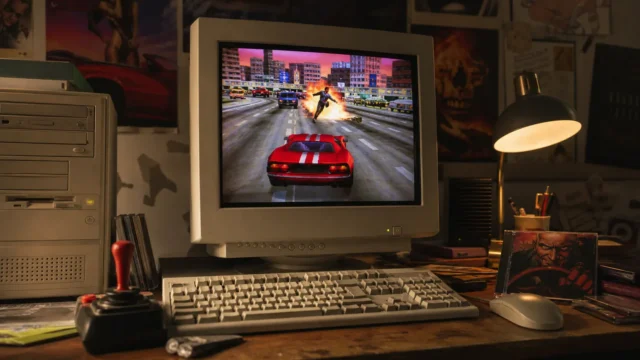
That shift mattered more than people sometimes remember now, because home computing was moving toward games, multimedia, CDs, speakers on the desk, and a growing expectation that the PC should not only calculate and display, but also sound alive.
- Why early PC audio often felt functional before it felt immersive
- How Sound Blaster 16 arrived at the right time for richer PC sound
- Why games and multimedia suddenly seemed more convincing
- What made a sound card feel like a personality upgrade
- Why configuration pain was part of the era, not a footnote
- What SB16 still represents in the story of personal computing
Early PC sound could be informative without being memorable
That is the distinction I keep coming back to.
The earlier PC could absolutely make noise, but much of that noise lived closer to signaling than atmosphere. It told you a thing had happened. It did not always make that thing feel large. Music could feel thin. Effects could feel detached from the world they were trying to represent. The machine sounded busy before it sounded expressive.
That was not necessarily a failure. It was simply where the platform was.
But once games became more cinematic, software became more multimedia-oriented, and desks started collecting better speakers, the gap became harder to ignore. Visual ambition was growing. Audio expectations were growing with it. The PC did not only need output. It needed presence.
That is why a real sound card upgrade could feel so transformative. It did not just improve fidelity in the abstract. It changed whether the machine seemed emotionally invested in what it was running.
Sound Blaster 16 arrived when the PC was becoming a multimedia machine
This timing matters a lot.
Archived Creative documentation from the early 1990s places the Sound Blaster 16 family in exactly the right era: a moment when digital audio, CD-related workflows, MIDI expectations, and home multimedia identity were all becoming more central to what a desktop PC was supposed to be.
That context helps explain why the card feels bigger in memory than a single technical feature list.
The Sound Blaster 16 was not just about “better than before.” It arrived when better sound was becoming part of the argument for the PC as a richer domestic machine. Games wanted stronger effects. Music playback mattered more. CD-ROM culture was rising. Multimedia was no longer a marketing word floating above the hardware. It was beginning to feel like the machine’s next real job.
That is part of why the card still feels symbolic. It did not merely add capability. It validated a direction.
The biggest difference was that the computer started sounding intentional
This is still the clearest way I know to describe the emotional change.
With a stronger sound card, the PC no longer seemed to be approximating audio as a side duty. It sounded like audio had been invited into the design. Explosions had weight. Voices had more authority. Music felt less like a separate layer and more like part of the atmosphere.
And atmosphere matters.
A game is not only geometry and input. A desktop environment is not only windows and menus. The moment sound becomes convincing, the software gains thickness. The world feels less symbolic and more inhabited.
That is why hardware like SB16 mattered so much to the culture of the time. It gave the PC more emotional reach.
This is also why later software experiences, from richer desktop media habits to the kind of audio intimacy I still think about when remembering why Winamp felt like the future, make more sense in a longer chain. The PC did not become a serious audio companion all at once. It got there through layers of hardware and expectation, and better sound cards were part of that climb.
The real jump was not just cleaner playback. It was the way stronger sound made software feel fuller, more intentional, and more emotionally present on the desk.
A sound card upgrade felt like a personality upgrade
This is one of the most charming things about older PCs.
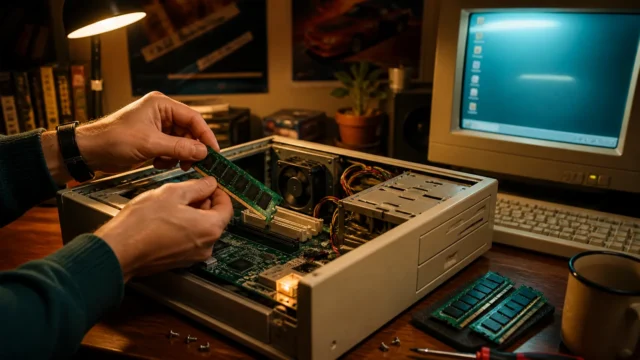
You could change what the machine was by changing what it could express. Add RAM and it became calmer. Add a better graphics card and it became visually bolder. Add a serious sound card and suddenly the PC seemed more outgoing, more theatrical, more willing to fill the room instead of merely occupying it.
That made the upgrade feel personal.
It was not only about technical improvement. It was about what kind of machine you wanted to live with. A better-sounding PC felt more complete. It was closer to being a home entertainment object without ceasing to be a computer.
That transition sits naturally beside the broader story of PCs becoming more lived-in, expressive personal spaces, the same emotional current behind why older Windows machines could feel so personal. Once a computer starts sounding better, it does not just communicate more. It inhabits the room differently.
The era still demanded patience, jumpers, ports, and a little bit of ritual
This is an important part of the memory too.
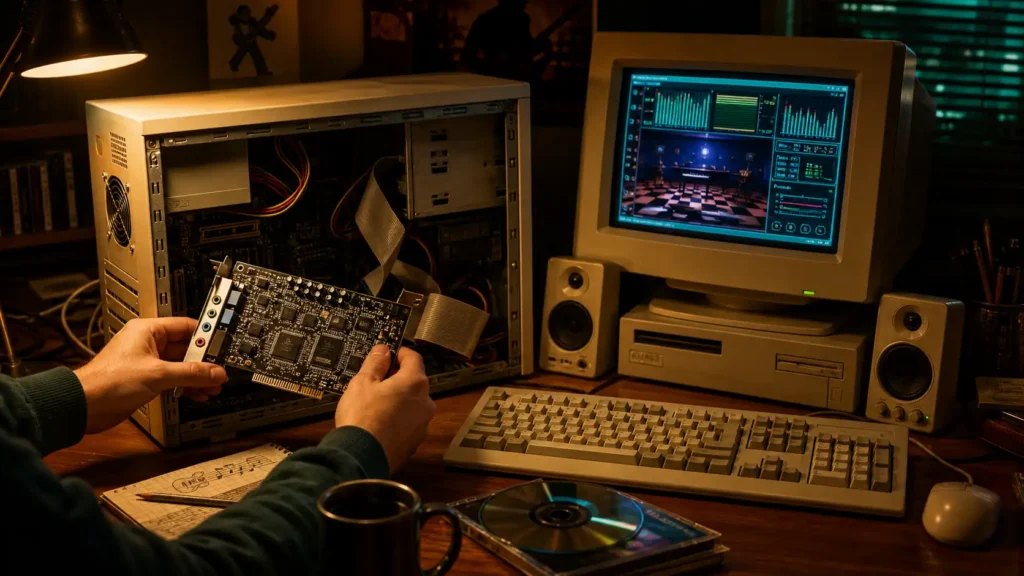
Sound Blaster 16 was exciting, but it belonged to a time when hardware upgrades still felt physical and a little ceremonial. Expansion slots mattered. Cabling mattered. Configuration mattered. IRQs, DMA channels, mixer settings, DOS habits, and compatibility lore were not decorative trivia. They were part of what it meant to make the machine behave properly.
That friction is part of why the success felt earned.
Modern hardware tends to hide more of its complexity behind cleaner defaults. Older PCs often made you participate in the negotiation directly. If the card worked well, if the speakers sounded right, if the game recognized the setup, you felt some ownership over the result because the result had required your involvement.
The ritual had cost.
It also had meaning.
That is one reason older hardware stories remain so vivid. The machine did not simply improve in the background. You helped it become more itself.
Sound Blaster 16 still represents the moment the PC became louder in every sense
Not just acoustically louder.
Culturally louder.
The card belongs to the period when the PC stopped being content with silent competence and started demanding richer sensory credibility. It wanted to entertain, not only assist. It wanted music, effects, voice, and media to matter. It wanted the desk to feel less like a workstation and more like a stage.
That is why the SB16 legacy still feels larger than a nostalgic spec sheet. It stands for a change in expectation. The PC was no longer just something you looked at. It was something you heard properly.
Even later transitions in display culture, the sort of shift I wrote about in thinking back on CRTs and LCDs, belong to the same bigger story: home computers becoming more immersive, more aesthetic, and more emotionally complete.
Sound Blaster 16 was one of the pieces that helped push the platform there.
Verification note: Historical and technical details in this retrospective were cross-checked against Creative’s official Sound Blaster history.
For broader context, continue with AGP vs. PCI: The Graphics Slot War of the Late 90s and The Era of Game Demo CDs Attached to Tech Magazines.
Conclusion
Sound Blaster 16 mattered because it helped the PC cross an emotional threshold. The machine already had software, graphics, and ambition, but better sound made those ambitions feel more convincing. Games gained atmosphere. Multimedia gained credibility. The computer stopped merely producing noises and started sounding like it meant what it was doing.
What I remember most is not only the technology itself, but the change in presence. A better sound card made the PC feel less like a quiet box that happened to run programs and more like a machine with mood, force, and personality. That is why Sound Blaster 16 still feels like the expansion card that gave PCs a voice.
FAQ
Was Sound Blaster 16 the first important PC sound card?
No. Important PC sound hardware existed before it. What made Sound Blaster 16 so memorable was that it arrived at the right moment in the multimedia era and became strongly associated with richer, more convincing PC audio.
Why did PC audio feel so different with a sound card like SB16?
Because better playback and stronger audio support made music, voices, and effects feel more intentional and immersive. The difference was not only technical quality. It was also atmosphere.
Did installing a sound card still require manual setup in that era?
Very often, yes. Part of the experience involved expansion slots, ports, settings, and compatibility details that modern hardware usually hides from the user.
Why does Sound Blaster 16 remain culturally important?
Because it represents the point where the PC became a more convincing entertainment and multimedia machine, not just a computer that happened to make sounds.
How does SB16 connect to later PC media culture?
It helped normalize the idea that audio mattered deeply on the desktop. That expectation fed into later software, games, and media habits where the PC was expected to deliver a fuller sensory experience overall.