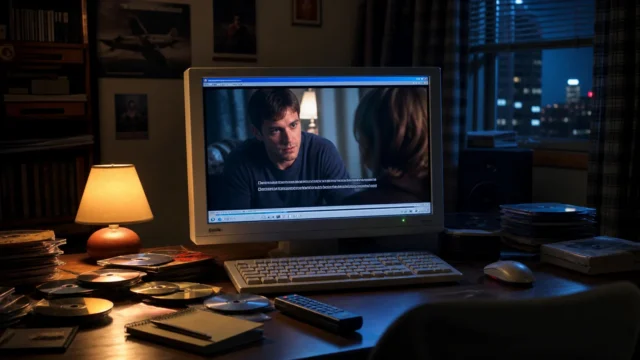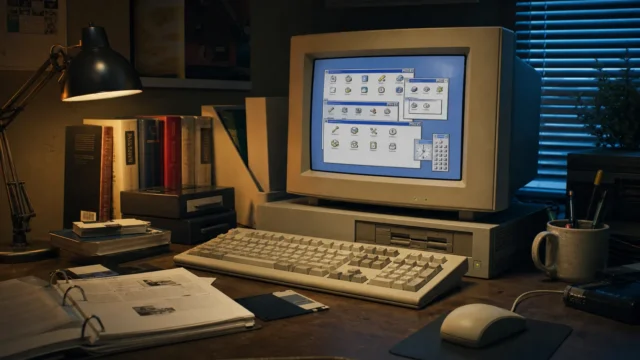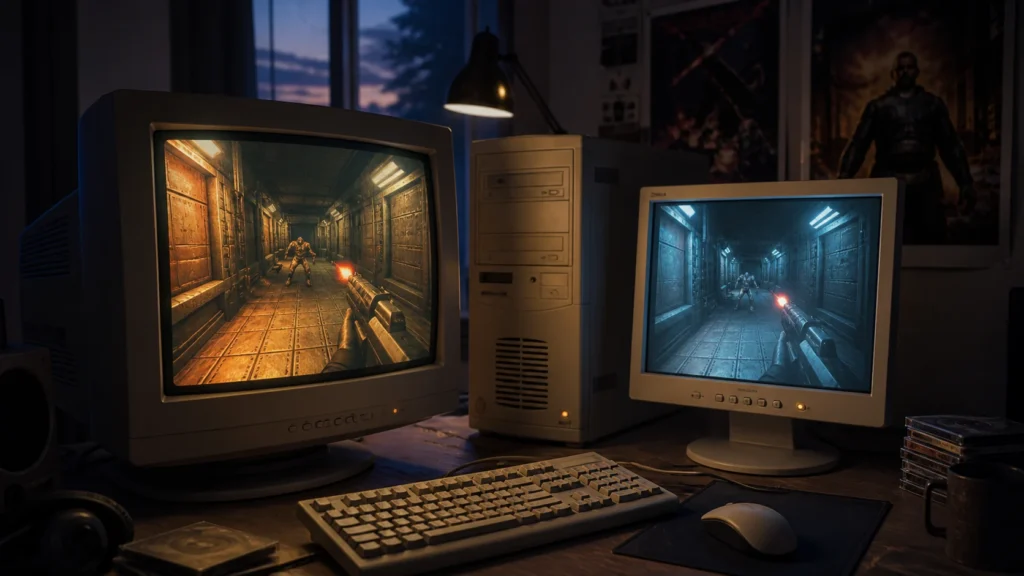
The day I switched from CRT to LCD, I thought I was participating in progress. The new monitor was thinner, lighter, cleaner, and somehow morally aligned with the future. It took up less space, looked better on the desk, and made the old CRT seem suddenly prehistoric, like a piece of computing that had overstayed its welcome by several years. If you had asked me before I plugged it in, I would have told you the story was obvious: the flat panel had arrived, the old glass giant was leaving, and that was that.
Then I started using it.
That is when I began to understand why gamers had been so stubborn about CRTs. From a distance, their attachment looked irrational. Why defend the heavier, hotter, bulkier thing when the elegant replacement was already here? But once I lived through the switch myself, the argument stopped sounding nostalgic and started sounding tactile. The CRT had not just been a display. It had been part of how the games felt.
- Why the LCD felt like an obvious upgrade at first
- What the CRT had been doing that I had never learned to name
- Why motion and responsiveness suddenly felt different
- How early LCDs looked modern but often felt emotionally colder
- Why gamers defended bulky monitors longer than outsiders expected
- What the whole transition says about progress in PC hardware
The historical details below are checked against the U.S. Department of Energy guidance; the interpretation and first-person perspective remain the author’s own.
The LCD looked like the future before it had to prove itself
Part of the power of the first LCD was visual theater. A CRT dominated the desk whether it deserved to or not. It was deep, heavy, curved, and unapologetically physical. It made furniture choices for you. It turned the whole computer setup into an object with gravity.
The LCD changed that instantly. Suddenly the desk felt wider. The room felt cleaner. The monitor looked like it came from the next chapter of personal computing rather than from the same chunky era as beige speakers, thick cables, and plastic towers with rattling drive bays. Even before the screen turned on, the argument for it felt persuasive.
That was the psychological advantage flat panels had in those years. They did not merely promise better ergonomics. They promised escape from visible oldness. If you were a teenager or a young PC user trying to make the machine feel more current, thinner was not just thinner. Thinner meant newer, neater, smarter.
I think this is why so many early LCD disappointments arrived late. The first victory happened before the first game even loaded.
I did not realize how alive the CRT had felt until it was gone
The strange thing about old hardware is that you often fail to notice its strengths while it is still normal. A CRT did not wake me up every day by announcing, "Here is your motion clarity. Here is your phosphor glow. Here is the immediacy of this image." It just showed the game, and because I was used to it, I treated that experience as neutral reality rather than as a specific display technology with distinct qualities.
Only after switching did I understand that the CRT image had possessed a kind of presence. It felt deeper, softer in some places, sharper in others, and somehow less detached from movement. Fast scenes did not seem to smear in the same way. Mouse movement felt more direct. The picture had a kind of energy that was difficult to describe at the time because the vocabulary had not yet become part of mainstream gaming conversation.
What I had once called "normal" turned out to be a whole visual language.
That is one of the reasons hardware transitions can be so disorienting. You are not simply upgrading a specification. You are replacing an atmosphere.
Early LCDs were cleaner objects but rougher gaming instruments
This is the part many people outside the PC world underestimated. The early LCD did not necessarily feel worse in every task. For general desktop use, text, web browsing, and the simple pleasure of reclaiming your desk, it could feel wonderfully civilized. The geometry looked neat. The panel looked modern. The machine stopped feeling like it was built around a small television.
But games exposed the weaknesses faster.
Motion could feel less convincing. Fast camera turns sometimes seemed less stable. The whole experience could feel a little more detached from your hands, even when you could not have explained exactly why. Some of that came from the early character of flat panels themselves, and some of it came from how good the CRT had been at things most of us never bothered to describe while we still had them.
The CRT had carried its own flaws, of course: size, weight, heat, geometry quirks, visible bulk, and the constant sense that moving it was a task requiring intent and perhaps a second person. But in a game, especially a fast one, those disadvantages often disappeared behind the fact that the image still felt startlingly immediate.
The new screen made me notice movement in a new and slightly unhappy way
This may have been the moment the whole debate finally clicked for me. On the CRT, movement had felt like part of the natural fabric of the game. On the LCD, I began noticing movement as a problem.
That is a subtle but important difference.
When a technology disappears properly into the experience, you stop thinking about it. When it begins calling attention to itself at the wrong moment, it becomes visible in an uncomfortable way. Early LCDs often looked gorgeous in stillness and less convincing in motion. You could admire them while the desktop sat idle and then feel a strange thinness once the game demanded quick tracking, fast panning, or the sort of bodily confidence that players rarely describe but immediately notice when it weakens.
I did not have the terminology then. I would not have said "sample-and-hold blur" or "motion clarity." I would only have said that something felt different in a way that made the new screen seem less decisive than the old one.
That vague dissatisfaction is probably why gamers sounded so stubborn in that era. They were often trying to defend a physical feeling before the language around that feeling became common.
Many gamers defended CRTs before the broader market had a neat vocabulary for the difference. They were often describing a tactile visual experience, not just reciting specs.
The LCD also changed the emotional tone of the desk
Not every difference was about performance. Some of it was cultural and atmospheric.
The CRT had personality. It hummed gently into existence. It occupied space with confidence. It seemed like a machine that transformed electricity into light with visible effort. The curved glass, the depth of the shell, the weight of the casing, even the sense that it was slightly excessive for the desk all contributed to the experience of the PC as a serious physical object.
The LCD felt calmer, flatter, tidier. That was good in many ways. But it also made the computer feel slightly less theatrical.
This reminds me of the same pattern behind why Windows XP felt more personal or why Winamp felt so futuristic. Older computing often had stronger texture. It was not always better. It was simply more present. The CRT belonged to that older world. It did not hide the machinery of display behind sleekness. It made the image feel earned.
When the LCD arrived, the desk improved aesthetically, but a small amount of that texture left with the old monitor.
Gamers did not refuse LCDs because they hated progress
This is the most unfair simplification the CRT loyalists had to endure. From the outside, it was easy to portray them as holdouts clinging to bulky old hardware because they were romantically attached to the past or resistant to change.
Some of that surely existed. Hardware nostalgia begins early. But a lot of the resistance was more rational than it sounded.
If games are a medium of motion, timing, precision, and feel, then the display is not a decorative accessory. It is part of the instrument. A better desk profile does not automatically beat a better gaming sensation. A thinner screen is not automatically a better screen if the thing you value most has become harder to see or feel.
What gamers were defending, often imperfectly, was not just a monitor technology. They were defending the right to judge new hardware by the lived experience of play rather than by showroom elegance alone.
That seems obvious now. At the time, it felt almost impolite to say it.
Nostalgia should not turn CRTs into perfect objects
CRTs were not magical. They were heavy enough to make setup changes annoying. They consumed space like they had never heard of apartments. They ran hot, they could be awkward to calibrate, and they were not exactly gentle companions during any desk rearrangement. You did not absentmindedly "just move" a CRT. You committed to relocating it.
And early LCDs were not a scam. They really did improve the experience of living with a computer in many contexts. They helped make desks saner. They pushed display design toward a future that eventually became genuinely excellent. Modern flat panels owe their existence to those first awkward generations.
The honest point is not that CRTs were better in every way. It is that they were better in some of the ways gamers cared about most, and those ways were easy for the mainstream market to undervalue because they were experiential rather than architectural.
New hardware often wins first on appearance, convenience, or aesthetics. That does not always mean it has already won in feel, especially for the people who use it hardest.
The switch taught me something larger about PC history
The transition from CRT to LCD now feels like a familiar pattern in hindsight. New hardware arrives with obvious practical advantages, cleaner industrial design, and strong cultural momentum. The old hardware looks embarrassing for a while. Then, slowly, people rediscover that the older thing had certain human qualities the market had not replaced yet.
That is not an argument against progress. It is an argument for remembering that convenience and quality do not always move in lockstep.
The day I switched to LCD, I thought I was only replacing a monitor. What I was really doing was encountering one of the oldest lessons in computing: the future often arrives in an unfinished emotional state. It may solve the visible problems first and the deeper experiential ones later.
Conclusion
Switching to an early LCD helped me understand why gamers loved CRTs because it turned an abstract loyalty into a lived contrast. The LCD looked cleaner, smarter, and more modern. The CRT had looked old, bulky, and slightly ridiculous right until the moment it was no longer there. Then the absence became visible. Movement felt different. Games felt slightly less immediate. The desk had improved, but the experience had lost a certain kind of life.
That does not make CRTs sacred or LCDs a mistake. It just explains why so many gamers held on. They were not refusing progress for the sake of it. They were noticing that some forms of progress arrive visually before they arrive physically. And once you have felt that difference for yourself, the old heavy monitor stops looking quite so irrational.
FAQ
Why did early LCDs feel worse for some gamers than CRTs?
Because the gaming experience is shaped heavily by motion, responsiveness, and visual immediacy. Early LCDs often looked cleaner on a desk but could feel less convincing once fast movement and precise control mattered.
Were CRTs actually better than LCDs for gaming?
In some aspects of that era, yes. Many players preferred CRTs for how motion and responsiveness felt, even though LCDs were more convenient, lighter, and more space-efficient.
Why were gamers so loyal to bulky CRT monitors?
Because the benefits of CRTs were often experiential rather than cosmetic. People who played a lot could feel the difference even when it was awkward to explain in simple consumer-language terms.
Did early LCDs have any real advantages?
Absolutely. They were thinner, lighter, tidier, and easier to live with in ordinary desk setups. For general use, they often felt much more modern and practical.
Is this just nostalgia talking?
Partly, but not entirely. Nostalgia strengthens the memory, yet the real transition from CRT to early LCD did involve a meaningful trade between physical convenience and certain qualities of the gaming image.