People often say Windows XP felt faster than modern operating systems, and in some narrow situations that memory is true. But the deeper reason XP remains so vivid is not just performance. It is that the whole experience felt smaller, clearer, and more personal. The machine seemed easier to understand. The software felt more local. The interface carried more identity. Even the rough edges contributed to a sense that the computer belonged to you in a direct, tactile way.
- Why XP felt fast even on modest hardware
- How simplicity changed the emotional experience of the PC
- What made it feel more personal than many modern systems
- Which parts are real advantages and which parts are nostalgia
- What current builders and power users can still learn from that era
The Windows XP timeline below is checked against Microsoft’s official lifecycle documentation; the interpretation and first-person perspective remain the author’s own.
It asked less of the machine and less of the user
Windows XP belonged to a period when mainstream operating systems still felt relatively compact compared with what came later. Hardware expectations were lower, background services were fewer, and the typical user workflow involved less cloud synchronization, less telemetry-shaped product logic, and fewer always-on platform layers competing for attention. That did not make XP objectively better in every technical dimension, but it did make the machine feel more immediate.
When people say XP felt fast, they often mean the system gave feedback quickly in the places they touched all the time: booting, opening folders, launching programs, moving around the desktop, and interacting with media and files. Speed, in other words, was partly about responsiveness and partly about how little conceptual noise surrounded the task.
Its simplicity reduced cognitive drag
Modern systems do more, protect more, abstract more, and connect more. That brings real benefits. But it also means there are more layers between the user and the result. XP felt simpler because the operating system asked fewer identity questions, made fewer background promises, and contained fewer parallel product agendas. The desktop, Start menu, Control Panel, and local file structure all contributed to the impression that the machine’s logic was available to you.
This is one of the reasons nostalgia for XP remains so strong among people who are perfectly capable of appreciating modern operating systems. The memory is not just “old software good.” It is “the system once felt easier to hold in my head.”
Simple does not mean secure, modern, or maintenance-free. It means the relationship between action and consequence felt more visible.
The PC still felt local in a stronger sense
Windows XP came from a moment when the center of gravity of personal computing was still strongly local. Your files, your media, your installed applications, your preferences, your weird desktop customizations, your messenger history, your downloaded themes, your unofficial utilities: all of it lived on the machine in a way that made the PC feel like a distinct personal environment. That localness shaped memory as much as any benchmark ever could.
Today, many workflows are smoother and more resilient because of cloud integration and cross-device continuity. But they also make the machine feel less singular. XP belonged to a time when the individual computer still felt like a primary place rather than a synchronized endpoint.
It had personality, even when it was cheesy
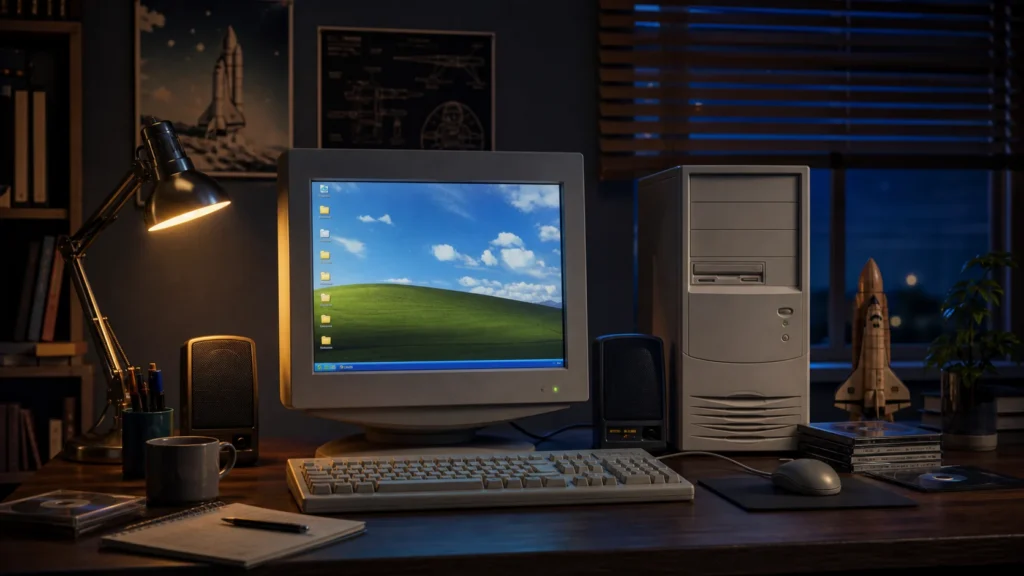
XP was not shy about looking like software. The colors, gradients, sounds, icons, wallpapers, user account screens, and visual themes were distinctive enough that people still recognize them instantly. That personality matters. Interfaces that are visually memorable are easier to attach emotions to, for better and for worse.
Modern design often aims for a kind of polished neutrality. XP was more willing to have character. Some of that character now reads as dated, but dated is not the same thing as forgettable. In many ways it was the operating system equivalent of why Winamp felt like the future: software that did not mind being personal, textured, and a little theatrical.
File-based computing was easier to see
Another reason XP felt clearer is that it sat closer to a file-and-folder mental model many users could actually inspect. Documents went in known places. Installers lived visibly on disk. Programs felt more tied to directories, shortcuts, control panels, and local settings than to accounts and services. Troubleshooting often meant poking around in a way that made the operating system feel legible, even if that legibility was sometimes partial or messy.
That sense of legibility is something a lot of power users still chase today, whether through Linux desktops, self-hosting, or homelab infrastructure. The appeal is not regression. It is the desire to understand the system well enough that it feels like a tool instead of a black box.
That visible, file-driven logic also helps explain why MS-DOS batch files made users feel in control, even when the underlying tools were limited by modern standards.
Nostalgia hides the parts XP was bad at
It is important to say this plainly: Windows XP was not a better platform than modern operating systems in the ways that matter most for security, hardware support, modern application models, and long-term internet survival. It came from a different threat era and a different product era. Many of the things people miss were possible partly because the ecosystem was smaller, less hostile, and less demanding.
That does not cancel the emotional truth of the memory. It just keeps the nostalgia honest. XP felt better in certain human ways, but that does not mean we should want to run today’s computing world with yesterday’s assumptions.
Older systems can feel more understandable while still being worse choices for modern connected life. The lesson is not to go backward blindly. It is to notice what made the old experience feel more grounded.
What modern builders can still learn from it
One useful lesson is that responsiveness and conceptual clarity matter as much as raw capability. Another is that personalization changes how much people care about their systems. A third is that when the relationship between a machine and its owner becomes too abstract, people start looking elsewhere for a sense of control. That is part of the same energy that drives interest in homelabs, self-hosting, local-first tools, and calmer infrastructure design.
It is not hard to see the connection. Articles about backups, Proxmox nodes, and network segmentation are not just about technology. They are also about recovering a more understandable relationship with systems. That is why a retro piece like this fits naturally alongside practical guides such as restore drills on Proxmox Backup Server or buying the right mini PC for Proxmox. The common thread is control with clarity.
Why XP still stays in memory
Windows XP remains emotionally durable because it sat at a sweet spot. It was modern enough to feel capable, old enough to feel graspable, and personal enough to feel like a place. That combination is rare. The operating system became part of how people remember learning computers, organizing music, customizing desktops, fixing problems, and building digital identity.
That broader period is easier to understand alongside Switching from Windows to Mac: The Ultimate Beginner’s Guide, which captures another part of the same transition in personal computing.
Conclusion
Windows XP felt faster, simpler, and more personal not just because it ran on lighter assumptions, but because it made the computer feel closer to the user. The interface had character, the workflows felt more local, and the system’s logic seemed easier to inspect. Nostalgia absolutely sharpens those memories, but it does not invent them. XP still matters because it reminds us that good computing is not only about capability. It is also about clarity, responsiveness, and the feeling that the machine is truly yours.
FAQ
Was Windows XP actually faster than modern Windows?
In some local interactive tasks on modest-era hardware, it often felt faster because it had fewer layers and demands. But modern systems are better in many other ways that matter for today’s workloads and security realities.
Why do people describe XP as more personal?
Because the desktop, files, themes, and overall localness of the machine made the operating system feel more like an owned environment than a synchronized platform endpoint.
Is this just remembering youth rather than software quality?
Partly, but not entirely. Personal context amplifies the memory, yet the software really did have qualities of responsiveness and legibility that many people still value.
What is the modern equivalent of that feeling?
For many enthusiasts, it shows up in self-hosting, homelabs, local-first tools, and systems that remain understandable enough to inspect and shape directly.
Why include retro essays on this site at all?
Because they broaden the editorial identity, create a more human technical voice, and connect practical infrastructure interests to the longer history of personal computing.